
Space
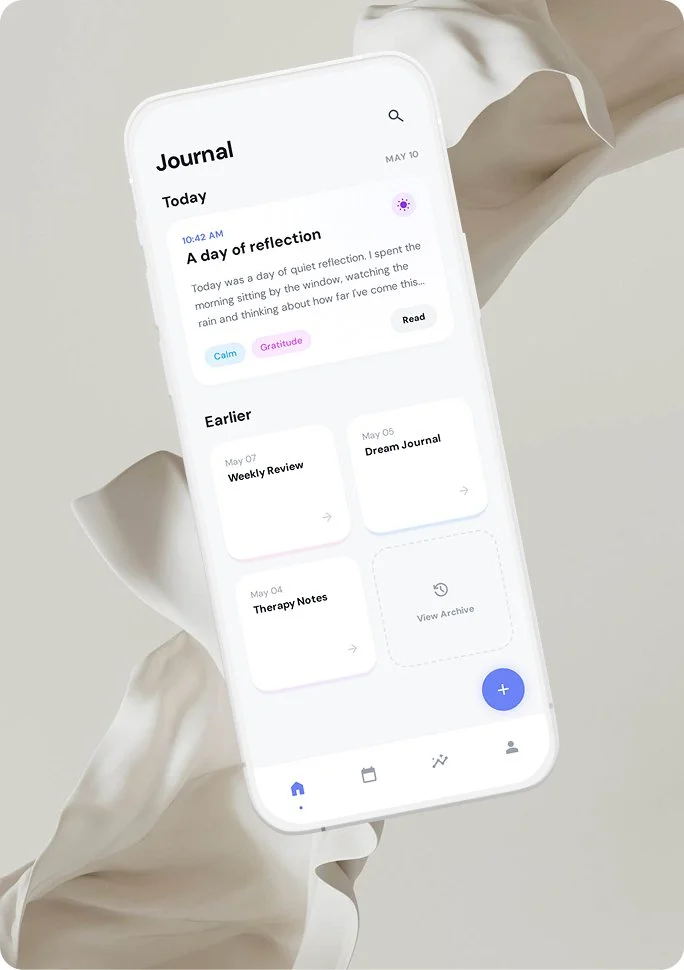
A self-care log app to help people document and track their wellness over time.
Time Jan 2025 - Mar 2025
Role Product Desinger
Team Team of 3
Responsibilities
Product strategy, user research, UX design, interaction design, prototyping, and usability testing.
The Objective
To design a self-care system that enables users to safely express emotions, track mental well-being over time, and develop independent self-reflection habits.
The Outcome
A functional mobile prototype validated through user testing and mentor feedback, demonstrating strong usability, clarity of emotional logging flows, and potential for real-world application as a personal mental wellness tool.
Problem
How Might We Help Users Manage Their Mental Well-Being Independently and Safely?
Many people experience ongoing emotional stress and uncertainty in their daily lives, yet lack simple tools to reflect on and understand their mental well-being. While journaling and self-expression can be helpful, these practices are often unstructured and difficult to sustain without guidance.
This lack of structure and clarity makes it harder for users to build self-awareness, recognize patterns, and confidently manage their emotional health on their own.
Goal
Design a Self-Care System That Empowers Independent Emotional Reflection
Design a simple, supportive self-care experience that allows users to log emotions, reflect through structured prompts, and visualize wellness patterns over time—helping them build emotional awareness and confidence without clinical complexity.
Overview:
Introduction
Space is a self-care logging experience designed to support independent emotional reflection and mental well-being. The apps helps users feel grounded and supported by enabling guided expression and wellness tracking over time in a safe, self-directed environment.
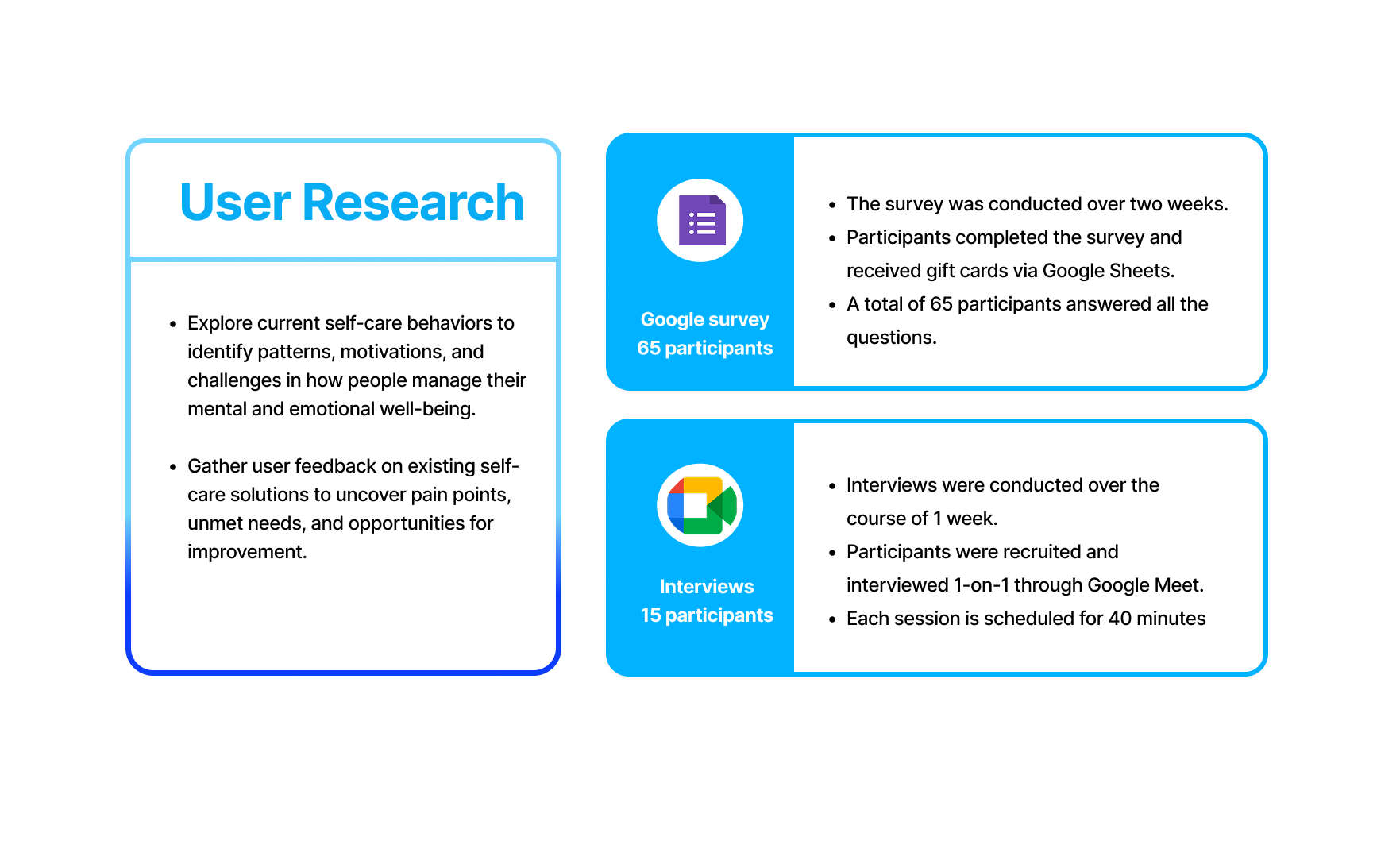
User Survey
Key Desgin Decions
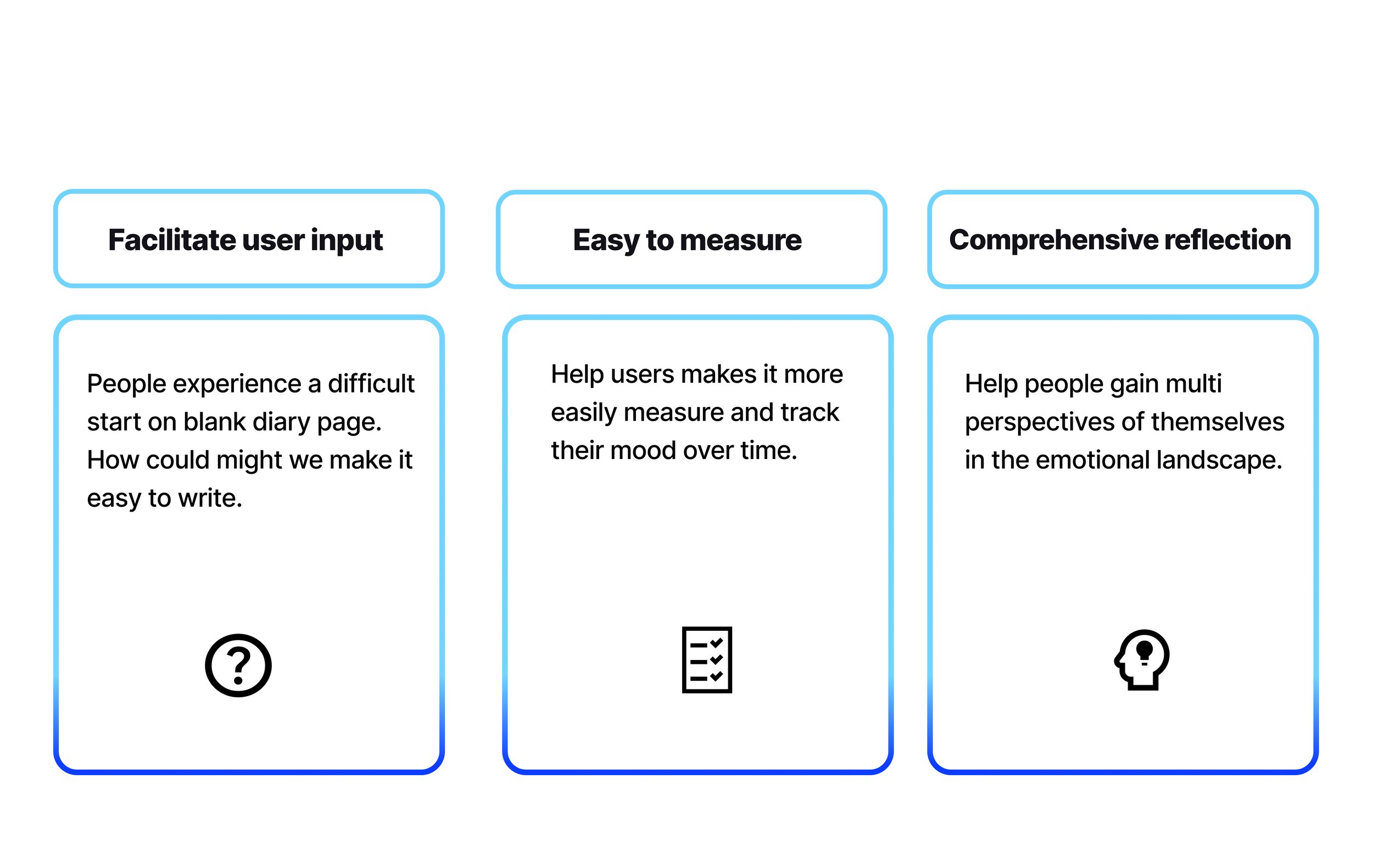
I focused on long-term reflection instead of daily streaks to avoid pressure.
I intentionally avoided numerical scoring because users felt judged by numbers.
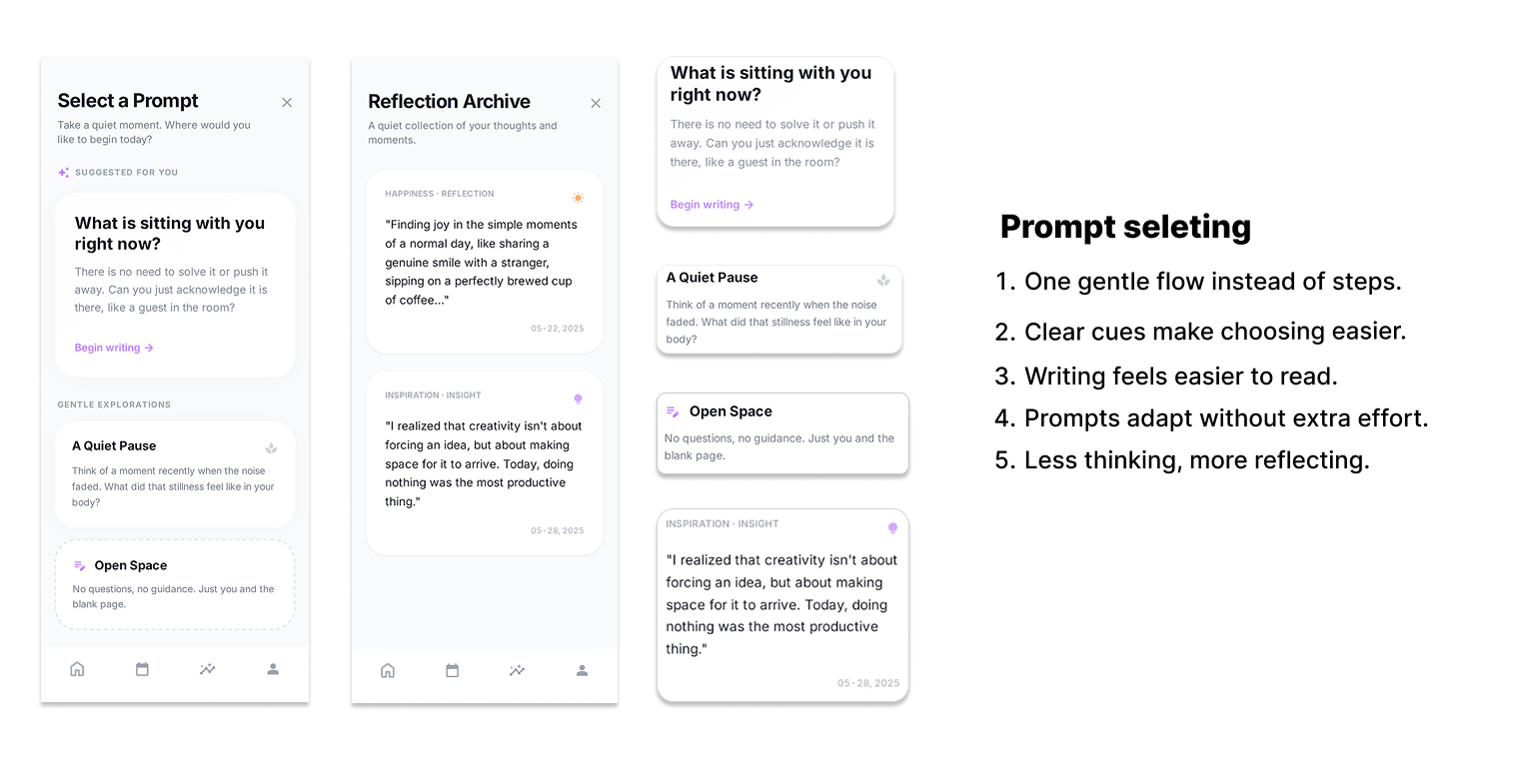
Users felt blocked by blank pages, so I designed prompts to reduce that anxiety.
I simplified interactions to keep the experience a light.
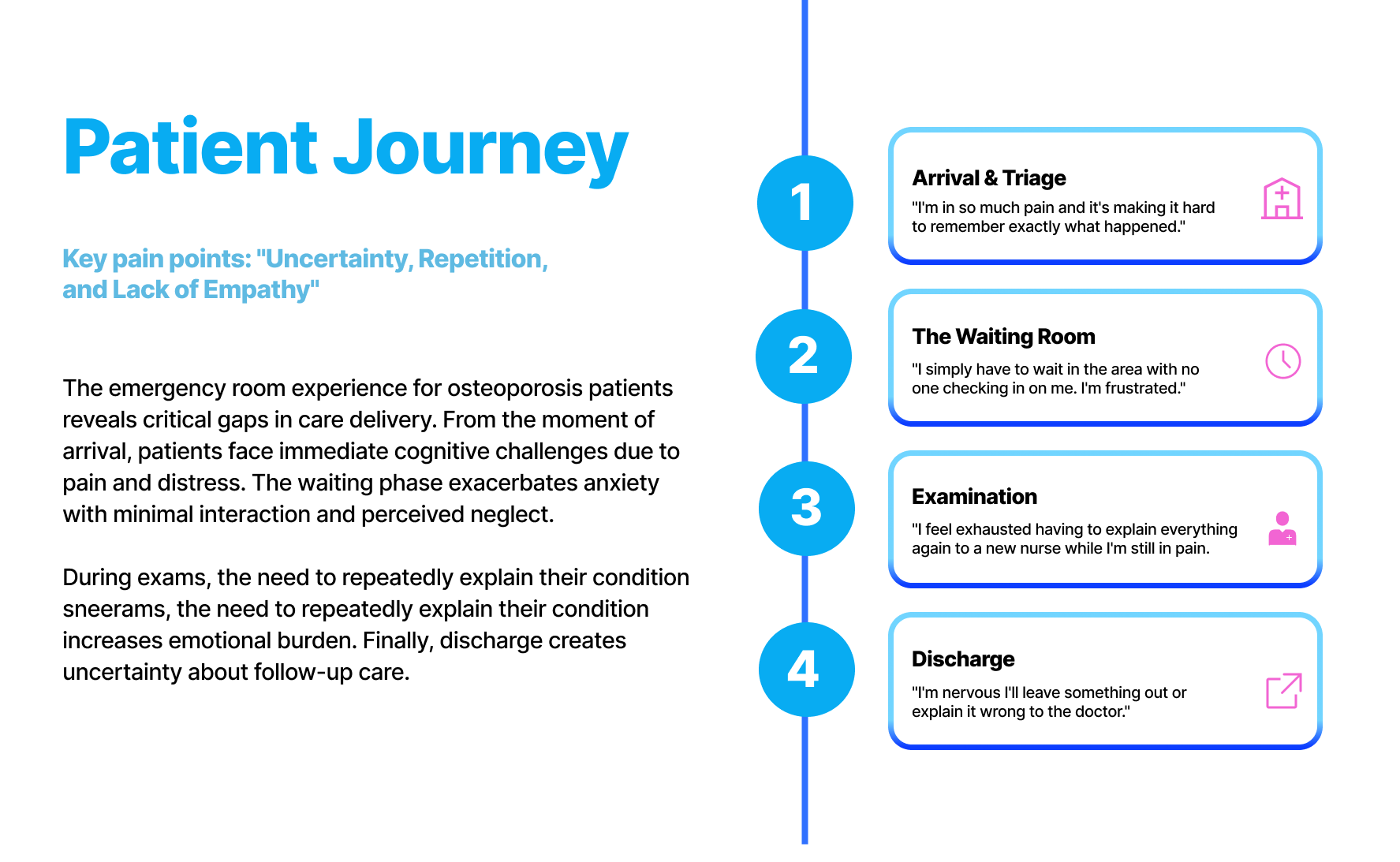
User Journey
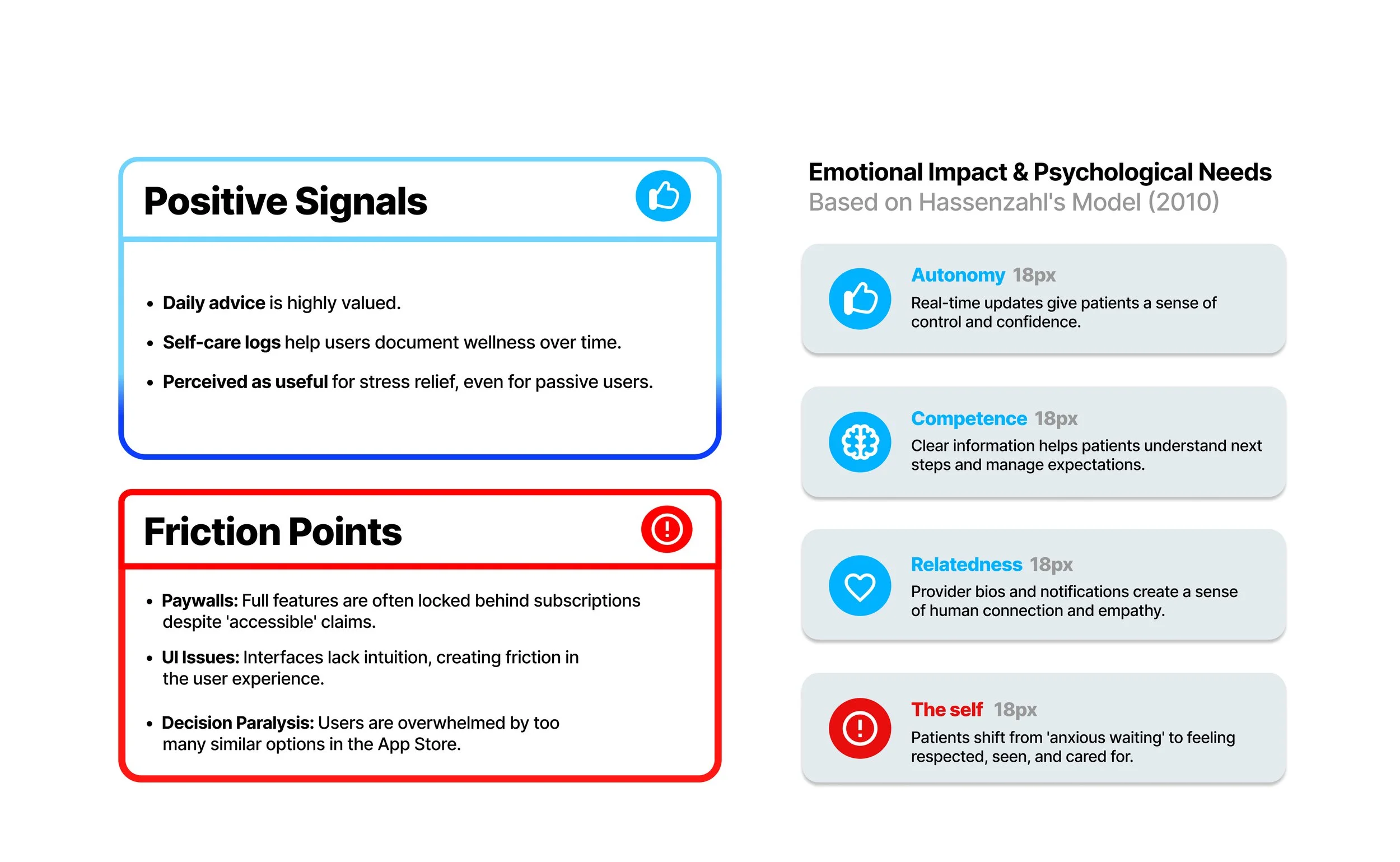
Data Synthesis
Solutions Overview
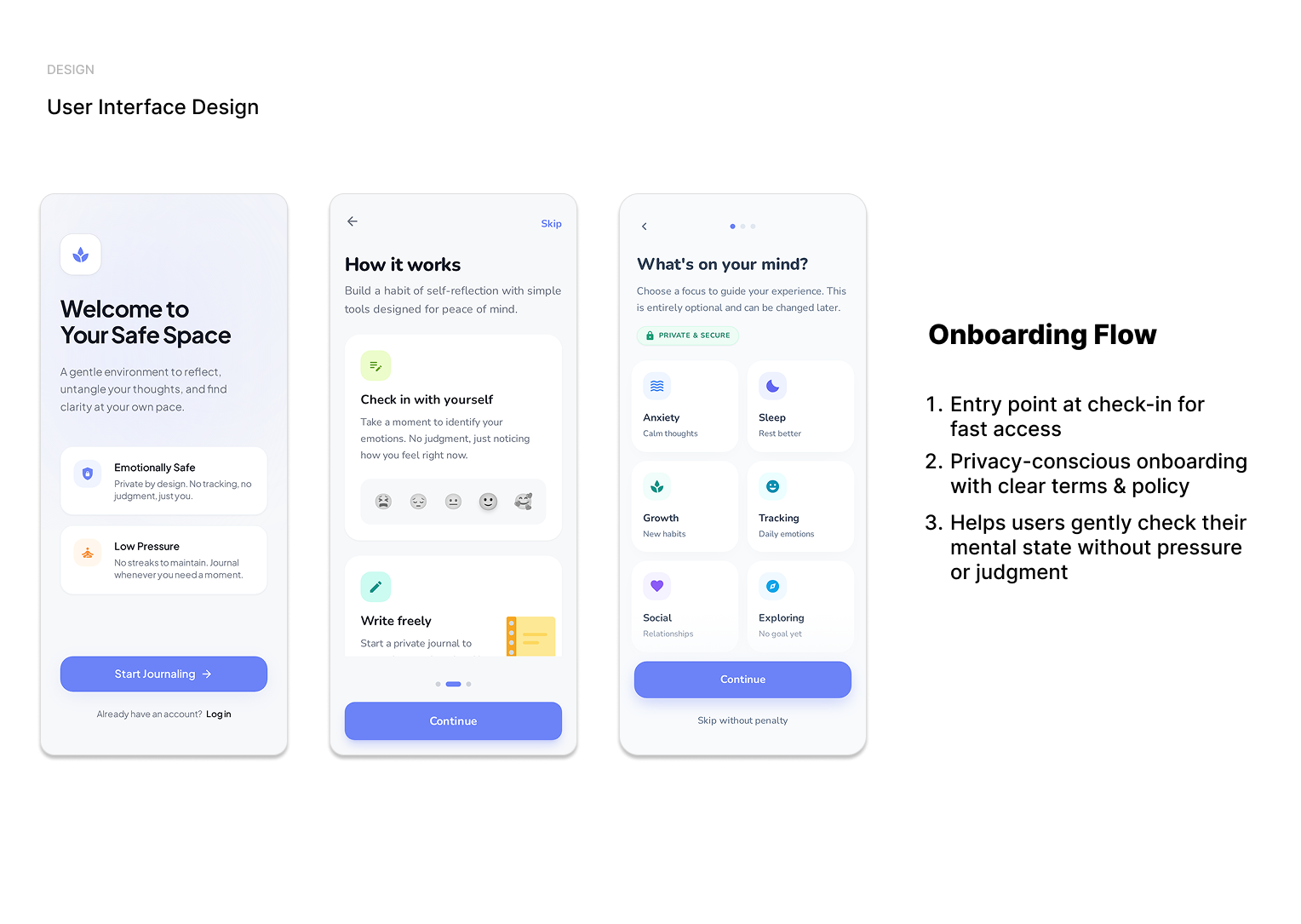
01 Onboarding Flow
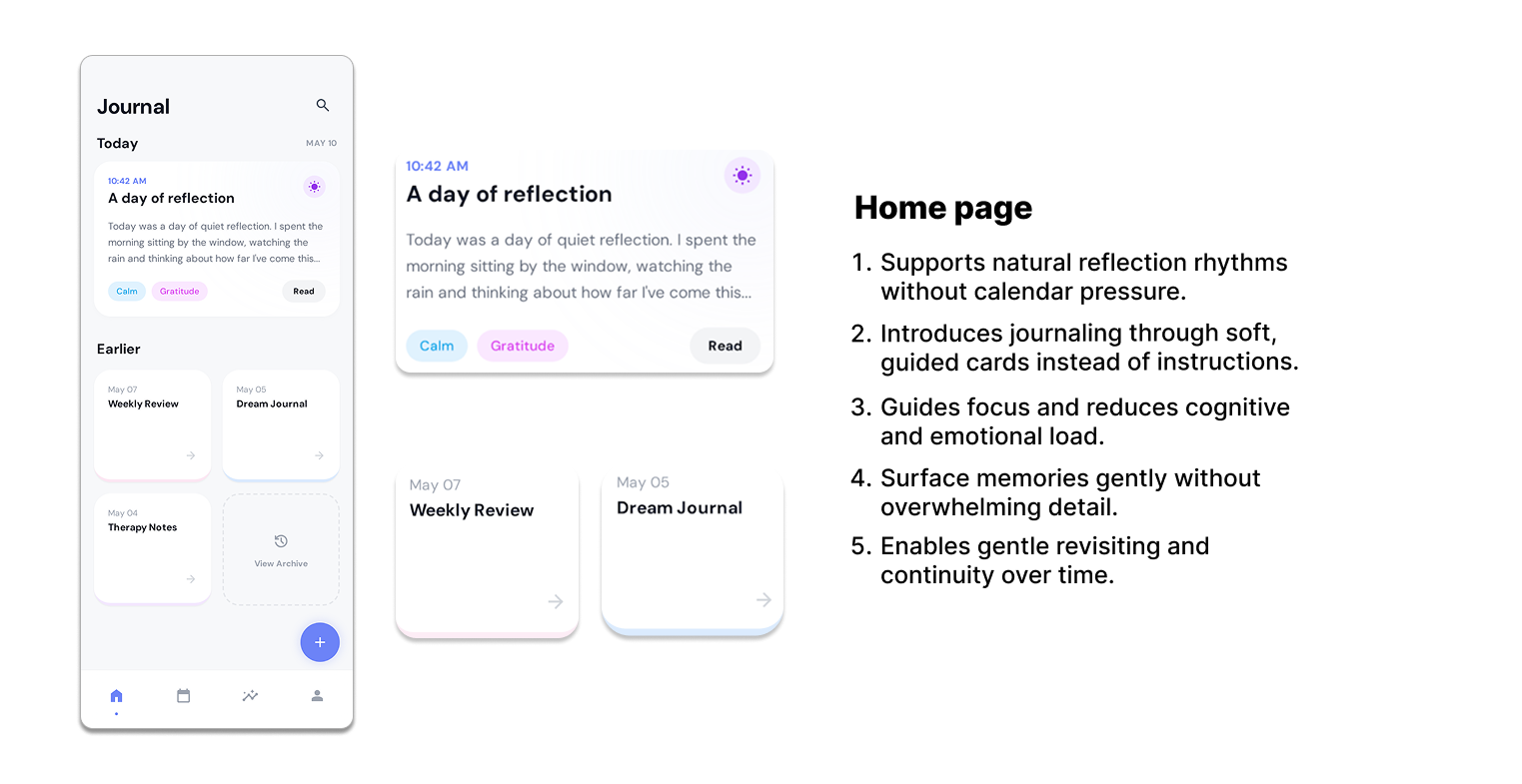
02 Home Page
03 Prompt Selecting
Friends & Patients' Feedback
Designing With Empathy, Not Extra Effort
This initiative was inspired by chats with friends and patients who recounted their experiences navigating uncertain, vulnerable, and emotionally stressful environments. Their stories demonstrated how quickly people might feel overwhelmed or detached when clarity and confidence are lacking.
After having these observations informed my design decisions, resulting in calmer, more supportive settings that lower cognitive load, communicate effectively, and respect users' emotional states during critical situations.
Lessons Learned
Designing Experiences
This research demonstrated that meaningful experience design is more than just usability or visual clarity; it is about how people feel while using a product and what they remember afterwards. Rather than focusing on constructing things, I learn to design around emotional states, allowing for autonomy, trust, and introspection. The experience supports users in situations of vulnerability by focusing on calm interactions and eliminating cognitive and emotional friction, making engagement feel optional, polite, and human.